Specifying from the use
On a house, a garage door is chosen largely for its appearance. On a commercial building, appearance comes last. The questions that govern the choice are practical ones, and we put them at the outset of every project.
- What passes through the opening? Vehicles, forklifts, pallets, people, or all of these.
- How often does the door operate? Ten cycles a day and three hundred a day call for different doors.
- What is on each side? Heated space and outdoors, two conditioned zones, a wash bay, a cold store.
- How much room is there? Headroom above the opening, sideroom at the jambs, and depth behind.
- What must the door resist? Wind, impact, forced entry, fire.
- Who operates it? Trained staff, the public, or an automated system.
- What do the codes and the insurer require? Fire ratings, egress, wind load, and safety devices.
The answers narrow the field quickly. They also frequently show that different openings in the same building want different doors.
The principal door types
Sectional overhead doors
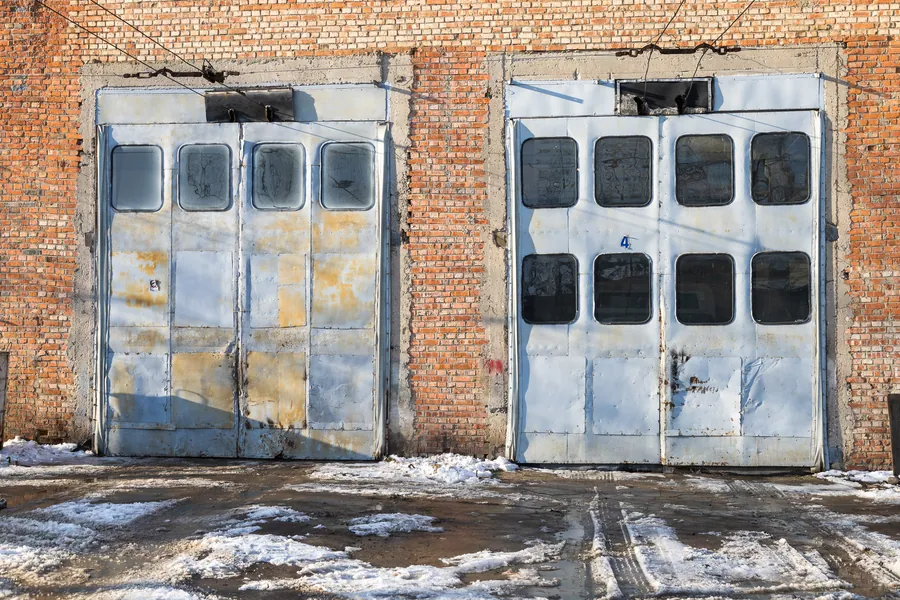
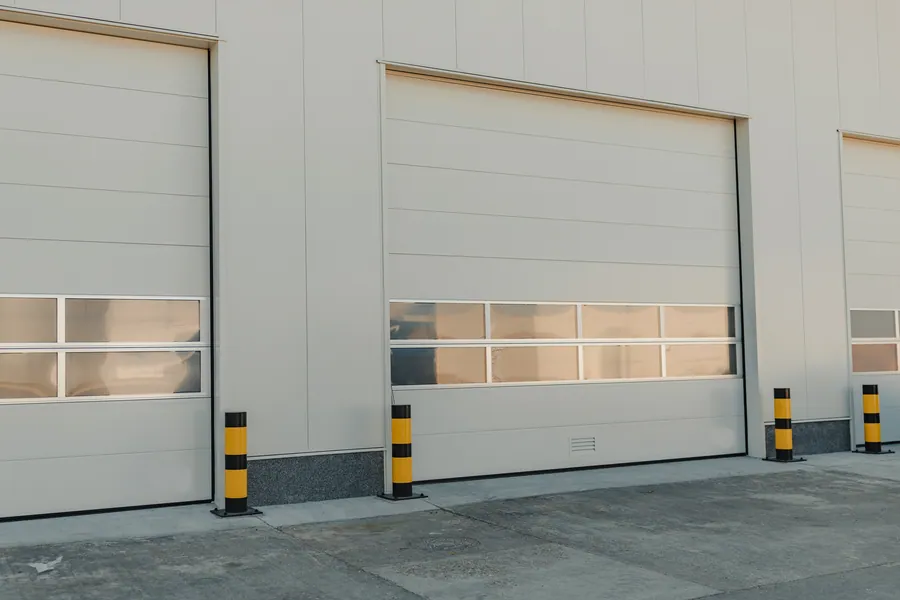
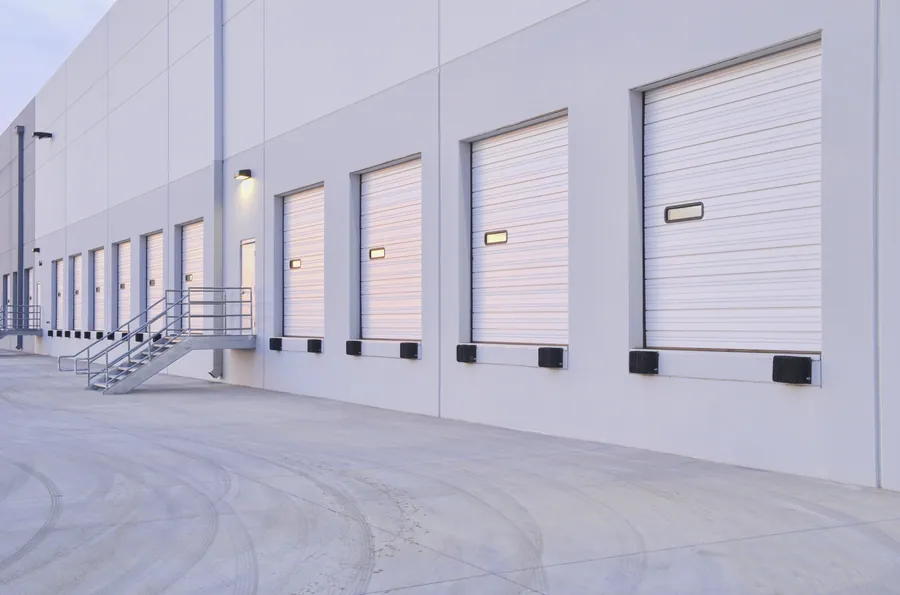
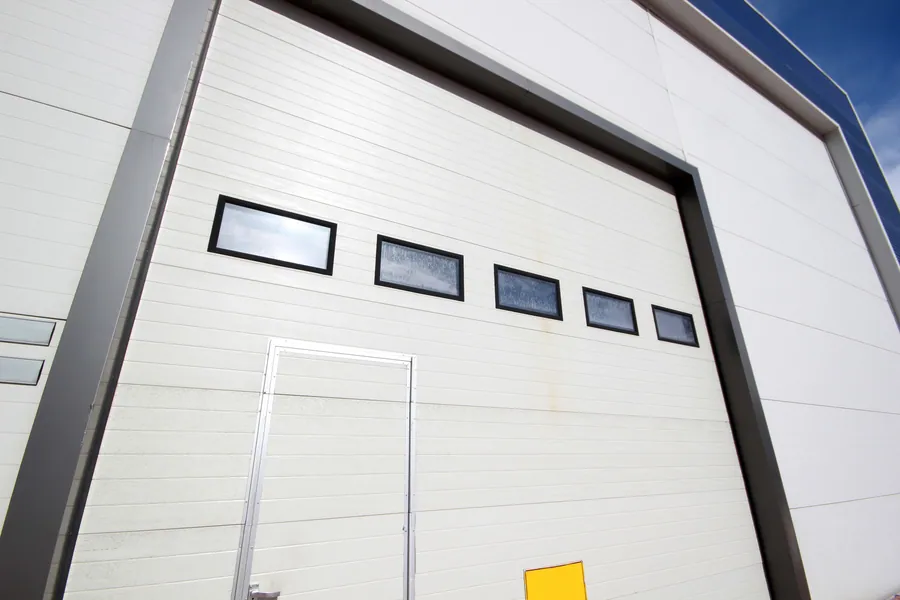
Hinged steel sections that travel on tracks, as a residential door does, but built far more heavily. They are available with thick polyurethane insulation, full perimeter seals, and glazed sections. Because the track can be arranged to follow the building, whether standard lift, high lift, vertical lift, or following a roof pitch, they suit a wide range of openings. Where insulation and a tight seal matter, the sectional door is the first choice. It is treated at length under sectional and dock doors.
Rolling steel doors
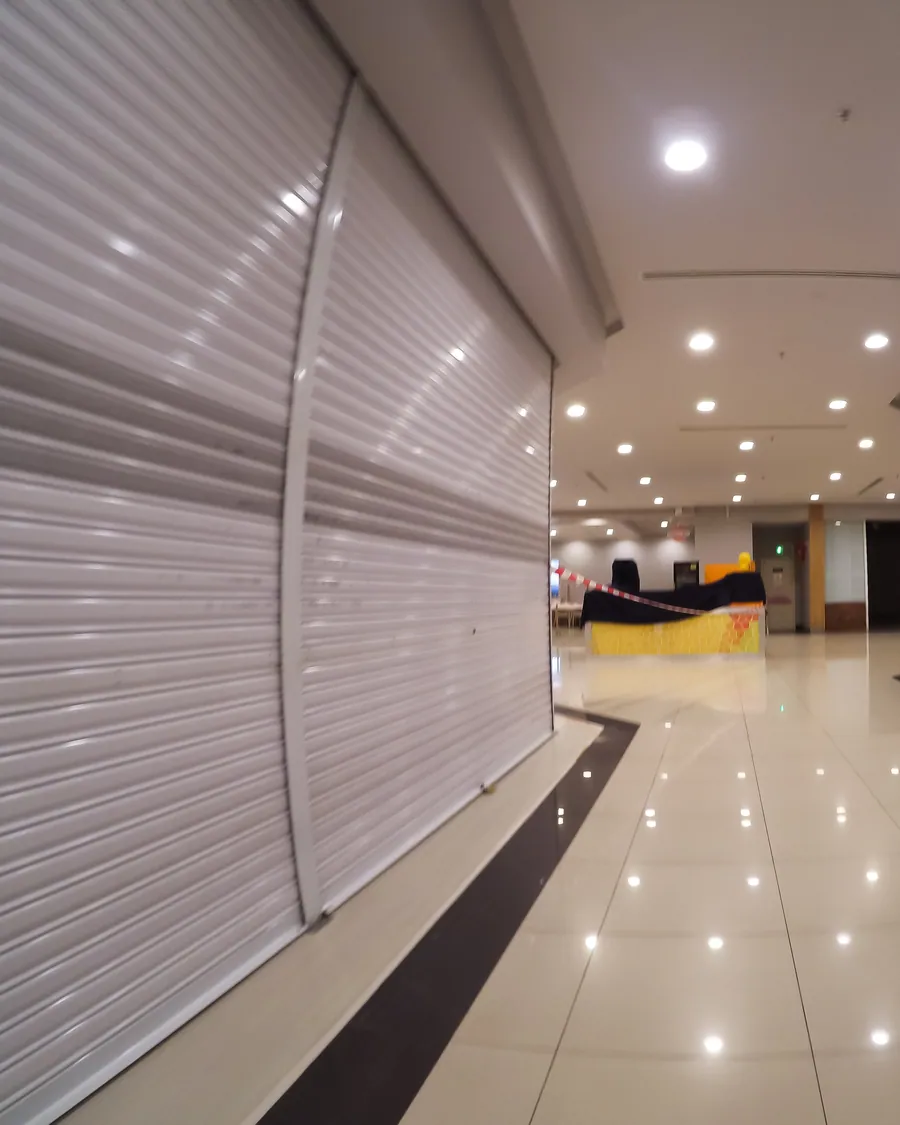
A curtain of interlocking steel slats that coils around a barrel above the opening. Rolling doors need very little headroom and no ceiling space behind the opening, and they withstand hard use. They are less well insulated and seal less tightly than sectional doors, though insulated slats are available. They are the usual choice for security, for openings with obstructed ceilings, and for fire-rated applications, on which see commercial fire doors.
Full-view aluminum doors
Aluminum frames glazed with tempered or insulated glass. Used on showrooms, service drives, fire stations, and restaurants with opening fronts, where visibility or daylight is the object.
High-speed doors
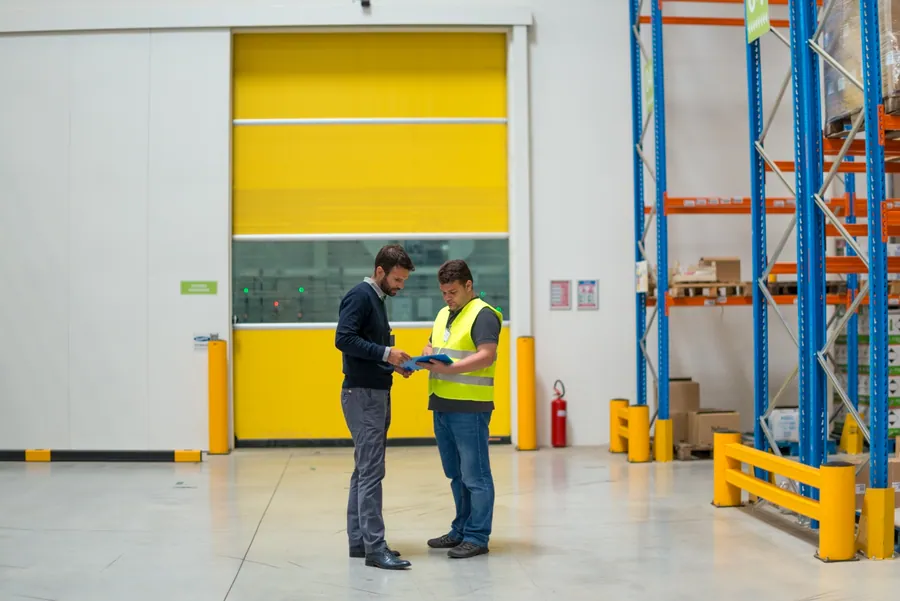
Fabric or rigid doors that open and close in seconds, for openings with constant traffic or where two environments must be kept apart. See high-speed roll-up doors.
Counter shutters and grilles
Small rolling doors over service counters and pass-throughs, and open grilles that secure an opening while permitting air and sight.
| Requirement | Usually indicates |
|---|---|
| Best insulation and seal | Insulated sectional |
| Minimal headroom or ceiling obstructions | Rolling steel |
| Fire separation | Rated rolling steel |
| Visibility and daylight | Full-view aluminum |
| Very frequent cycling | High-speed door or a high-cycle sectional |
| Security with ventilation | Rolling grille |
Different openings in the same building frequently want different doors.
Duty cycle
No aspect of commercial specification is more often neglected than the number of cycles a door will complete.
Springs are rated in cycles. The standard commercial spring is good for some ten thousand, as on a house. A door on a busy service bay may complete fifty cycles a day, and at that rate standard springs are exhausted within a year. Springs rated for twenty-five, fifty, or a hundred thousand cycles are available, and on any door in frequent use they pay for themselves in avoided stoppages.
The operator is rated likewise. Light-duty units are intended for a limited number of cycles in an hour. Continuous-duty units are built for constant operation. We size both springs and operator to the use the owner describes, with a margin.
Operators and controls
Commercial operators differ from residential openers in their construction and in the way they are mounted.
- Jackshaft operators mount beside the door and drive the shaft. They suit high-lift and vertical-lift sectional doors and rolling doors.
- Trolley operators pull the door along a rail and suit standard-lift sectional doors.
- Hoist operators add a hand chain, so that the door can be operated in a power failure.
Controls range from a simple three-button station to key switches, card readers, radio transmitters, vehicle detection loops, and timers. The right arrangement depends on who uses the opening and how.
Current safety standards expect a motorized commercial door that closes on a momentary signal to have a monitored entrapment protection device: photoelectric sensors, a sensing edge on the bottom of the door, or both. We fit them as part of the installation.