First principles
An electric operator does not lift a garage door. The springs do that. The operator’s task is to set a balanced door in motion, guide it, bring it to rest, and reverse it if anything is in the way. It follows that the first requirement of a good installation is a door in good order, and we test the door before we unpack the operator.
It also follows that power matters less than is often supposed. What distinguishes one operator from another is chiefly the manner in which it drives the door, and that determines its noise, its suitability for a given garage, and its demands for space.
The principal types
Belt drive
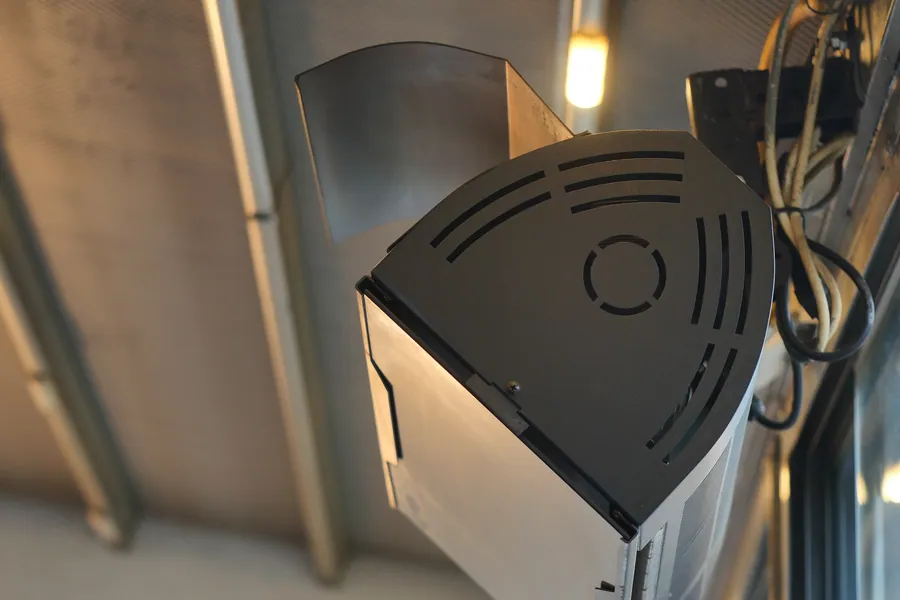
A reinforced belt carries a trolley along a rail fixed to the ceiling. Belt-drive operators with direct-current motors are the quietest of the rail-mounted types. They start and stop gradually, which is gentler on the door. For an attached garage, and above all one with living space above or beside it, this is our usual recommendation.
Chain drive
The same arrangement with a steel chain in place of the belt. Chain drives are durable and economical, and noticeably louder. They suit detached garages and outbuildings, where the sound disturbs no one.
Wall-mounted
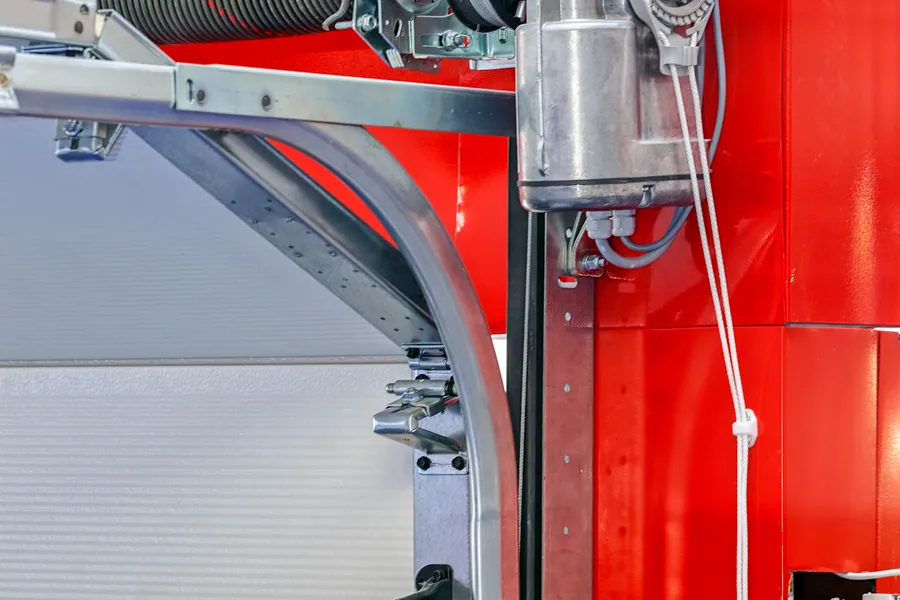
Also called a jackshaft operator. The unit is fixed to the wall beside the door and turns the spring shaft directly. There is no rail and nothing on the ceiling. It is the natural choice where the ceiling is high, sloped, or wanted for storage or a vehicle lift, and it is very quiet. It requires a torsion spring system, a modest amount of clear wall beside the door, and a nearby outlet.
Screw drive
A threaded steel rod moves the trolley. These have few moving parts but are less tolerant of wide swings in temperature, and they are now seldom chosen here.
| Belt | Chain | Wall-mounted | |
|---|---|---|---|
| Sound | Quiet | Loud | Very quiet |
| Ceiling space | Rail required | Rail required | None |
| Best suited to | Attached garages | Detached garages, heavy use | High ceilings, heavy or tall doors |
| Relative cost | Moderate | Lower | Higher |
Matching the operator to the door
A balanced residential door, single or double, is well served by an operator in the range commonly described as one-half to three-quarter horsepower. Heavier doors, including solid wood, full-view glass, and oversized carriage house doors, warrant more. A greater rating than the door requires confers no benefit.
Height is the other consideration. A rail-mounted operator is supplied for a seven-foot door, and an extension is fitted for doors of eight feet or more.
The first requirement of a good installation is a door in good order.
Features, weighed
Battery backup. A reserve battery operates the door through a power failure. In a region where ice and wind bring down lines most winters, we regard it as well worth having. See opener accessories.
Connected control. The door may be opened, closed, and monitored from a telephone. Its real value lies in confirming, from a distance, that the door is shut.
Soft start and stop. A characteristic of direct-current motors. It reduces noise and wear.
Integrated lighting. Light-emitting panels illuminate the garage evenly and do not interfere with the radio receiver, as some retrofit bulbs do.
Automatic lock. A bolt that engages each time the door closes. Useful where the garage holds tools or equipment of value.
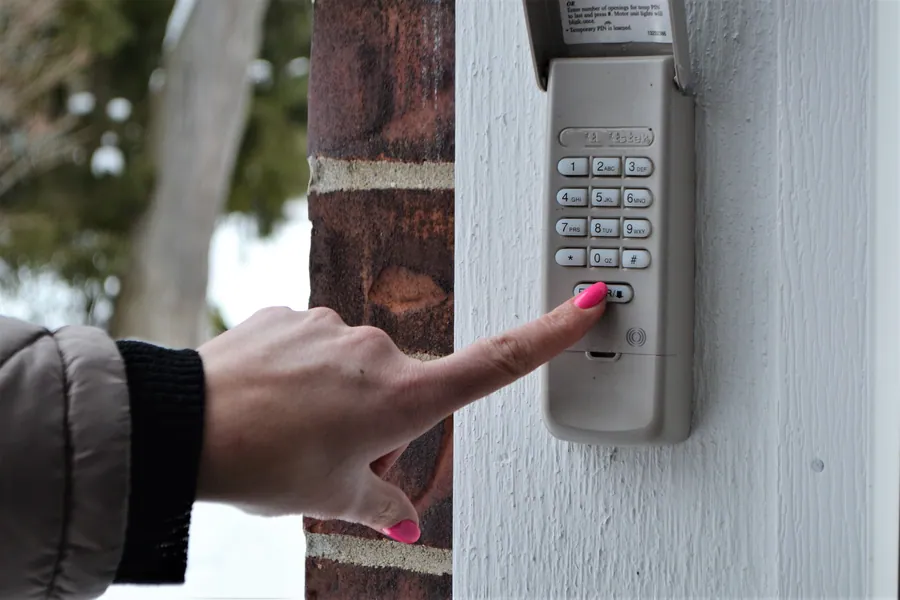
Exterior keypad. Entry by code, without a remote. We consider it very nearly essential.
What we examine beforehand
- The balance of the door, tested by hand
- The condition of springs, cables, rollers, and hinges
- Reinforcement of the top section at the point where the operator arm attaches
- Solid framing above the door for the header bracket
- Ceiling structure from which the unit can be rigidly hung
- A grounded outlet within reach. An extension cord is not an acceptable permanent supply.
- The height of the door and the clearance above it
Where the door itself needs attention, we say so and deal with it first. An operator fitted to a door with a failing spring will not last, and its safety reversal cannot be set correctly. The work is described under garage door repair.